
A 21-mile strip of water is holding the global oil market hostage. The ransom keeps climbing.
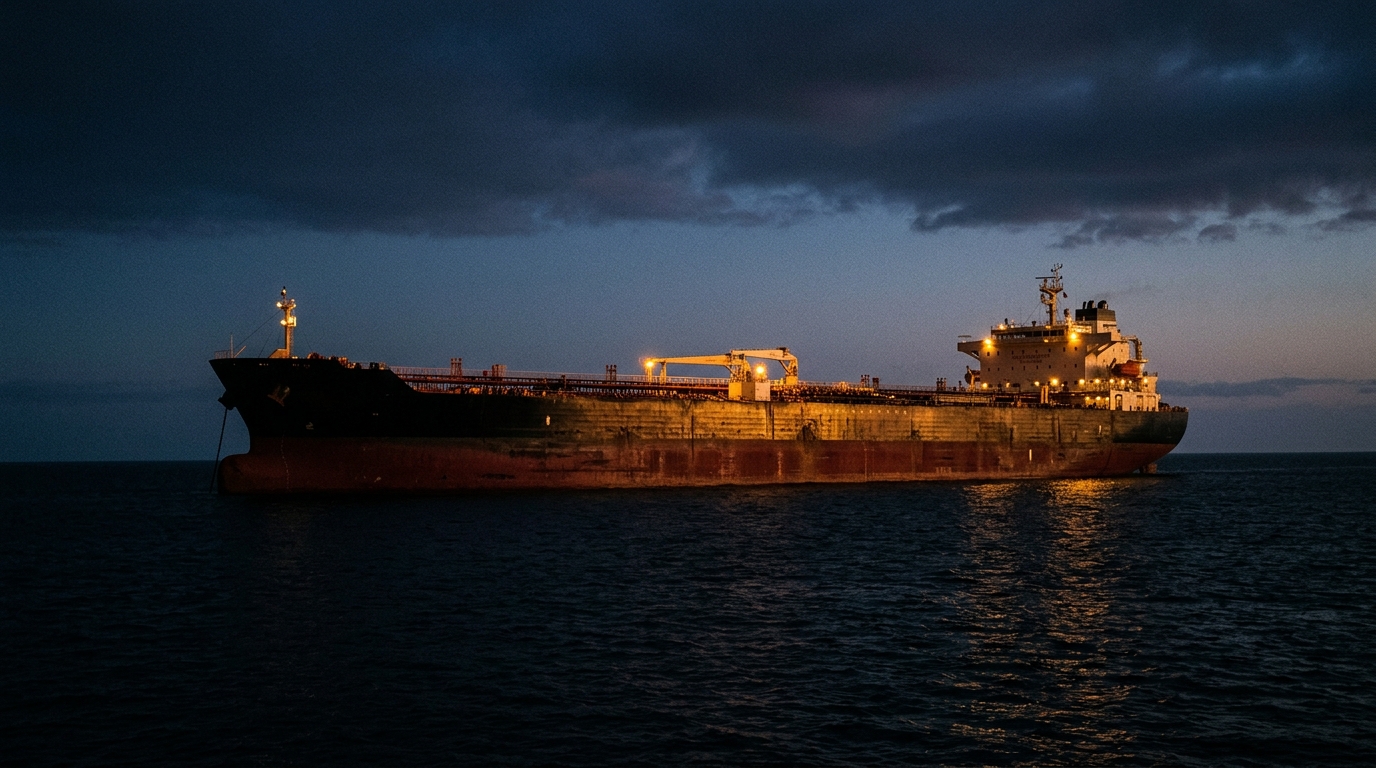
The Strait of Hormuz — which normally moves roughly one-fifth of the world’s crude oil every single day — has shut down. Tankers that once made this transit routinely are anchored offshore, crews unwilling to risk passage. Nine days into the disruption, more Gulf nations are now cutting production because they have nowhere left to store the oil they can’t ship out.
Below is a breakdown of what’s actually happening to crude oil prices, who’s cutting output, and what credible forecasts say about where things go from here.
What Set Off the Current Oil Market Crisis
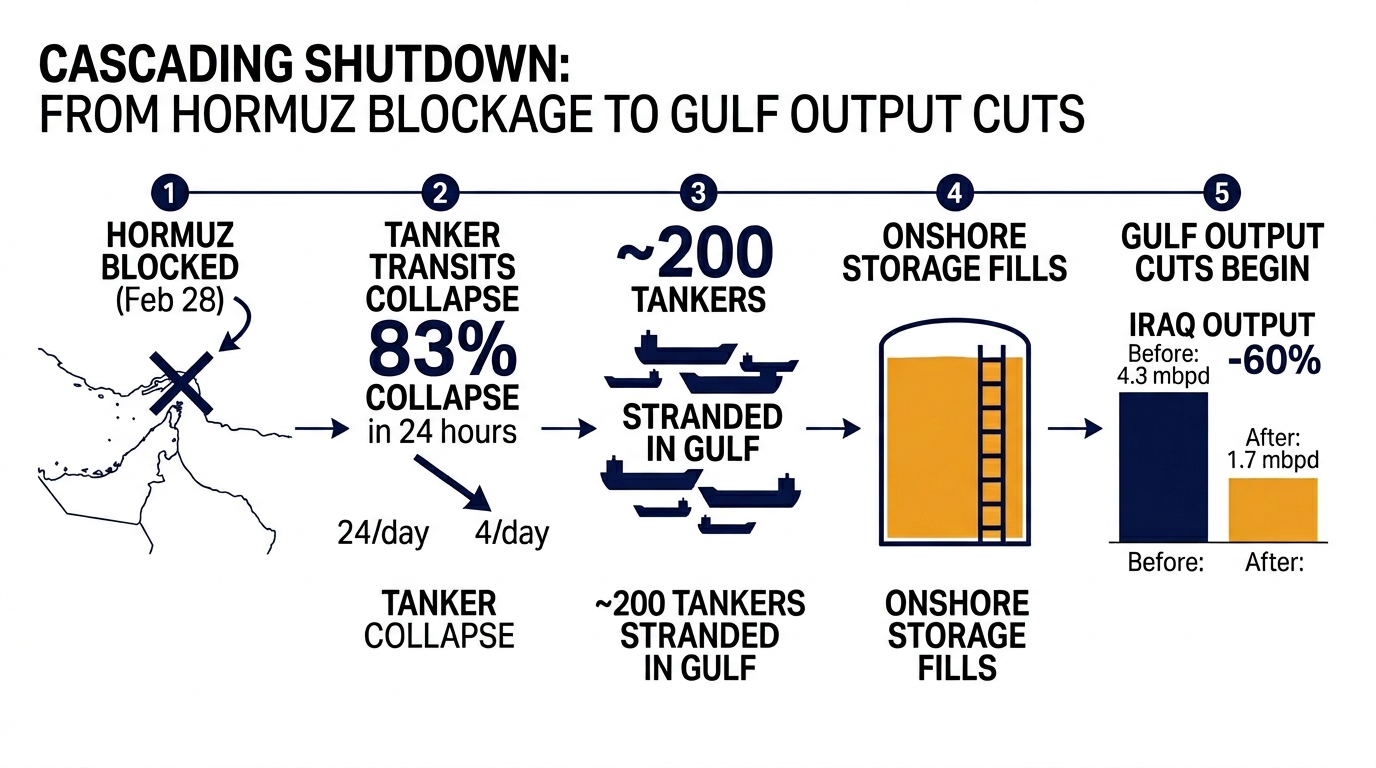
The trouble started February 28, 2026, when the United States and Israel launched coordinated strikes on Iran under an operation called Epic Fury, targeting Iranian leadership and nuclear infrastructure. Iran’s response was to declare the Strait of Hormuz closed. The Islamic Revolutionary Guard Corps issued direct threats to any vessel attempting transit — and followed through on them.
At least five tankers have been struck since the conflict began. Two crew members have been killed. With shipping insurers pulling P&I coverage and companies refusing to risk their vessels and sailors, commercial tanker traffic collapsed almost immediately — dropping from 24 daily transits to just four in 24 hours. Three of those four were Iranian-flagged.
Around 200 internationally-trading crude and product tankers are now stranded inside the Persian Gulf, loaded but unable to move.
The volume Hormuz normally handles makes this unlike anything the market has dealt with before. Tracking data compiled during the crisis puts throughput at roughly 20 million barrels of oil per day — about 20% of global seaborne oil trade. In 2024, 84% of crude shipped through Hormuz was headed to Asian markets.
Why Iraq, UAE, and Kuwait Are Cutting Output
Here’s the knock-on problem that makes this more than a shipping story: when oil can’t leave the Persian Gulf, producers run out of places to store what they’re still pumping. Once storage fills, they have to stop pumping too.
Iraq is already there. Output has fallen to roughly 1.7–1.8 million barrels per day, down from around 4.3 million pre-conflict — a 60% drop. Iraq relies almost entirely on Hormuz for its crude exports. Unlike Saudi Arabia and the UAE, it has no meaningful alternative pipeline route.
The UAE and Kuwait have started their own cuts as onshore storage fills. The number of empty supertankers available for loading in the Gulf is running out fast — which means even a producer willing to keep pumping soon won’t have a vessel to load into.
Saudi Arabia is diverting as much as it can. Shipments from western Red Sea terminals are running at around 2.3 million barrels per day so far this month — roughly 50% more than any comparable period since 2016. But Saudi Arabia typically exports around 6 million barrels a day from the Persian Gulf side. The math doesn’t close.
Where Crude Oil Prices Stand — and What Banks Are Forecasting
Brent crude climbed 30% last week — its biggest weekly gain in six years. As of Friday, March 7, it was sitting just below $100 a barrel.
Some regional benchmarks have already crossed it. Murban crude futures (Abu Dhabi’s flagship grade) closed at $103 a barrel. Oman crude hit $107. Chinese crude futures on the Shanghai International Energy Exchange settled at $109 in US dollar terms.
The major banks have updated their forecasts accordingly.
Goldman Sachs raised its Q2 2026 Brent projection by $10 to a base-case of $76 — but warned explicitly that if Hormuz flows stay depressed through March, prices would exceed the 2008 and 2022 peaks. Five more weeks of disruption, the bank wrote, puts Brent at $100.
JPMorgan’s head of global commodities research, Natasha Kaneva, said this is the first near-total halt to Hormuz shipping in modern history. The bank estimated that Iraq and Kuwait could face full production shutdowns within days — a combined loss of up to 4.7 million barrels per day.
Barclays flagged $120 a barrel as possible if the conflict runs another two weeks. ING’s base case: four weeks of disruption total, with normalization only if US and Israeli strikes sufficiently degrade Iran’s capacity to enforce the closure.
Stefano Grasso, senior portfolio manager at Singapore fund 8VantEdge, said it simply: there is effectively no ceiling on prices in the short term if disruption continues.
Asia Gets Hit First, Europe and the US Follow
Japan imports over 90% of its crude from the Middle East, and about 70% of that arrives via Hormuz. Japanese refiners are already requesting access to national oil reserves. China has halted fuel exports to preserve domestic supply. South Korea is reportedly considering reinstating an oil price cap for the first time in 30 years.
Europe’s exposure is different but still sharp. Half of EU jet fuel imports typically move through Hormuz. On Thursday, March 5, northwest European jet fuel prices hit an all-time high of $1,528 per ton — over $190 a barrel equivalent — according to General Index data. European natural gas surged as Qatar shut down LNG production at its two main facilities after drone strikes hit Ras Laffan Industrial City.
The United States isn’t directly in the supply chain the same way. It no longer depends heavily on Middle Eastern crude. But US gasoline prices are already rising, and the administration briefly floated tapping the Strategic Petroleum Reserve and intervening in oil futures markets before walking both ideas back. What it has done: launched a $20 billion maritime reinsurance facility aimed at encouraging tanker operators to resume Gulf transits.
Shipowners aren’t biting. Industry sources say insurance cost was never really the issue. What they need is full naval escort — comparable to Operation Prosperity Guardian in the Red Sea — or an end to the fighting.
How This Ends — Three Scenarios the Market Is Pricing
Short disruption (2–4 weeks): US and Israeli strikes degrade Iran’s ability to attack tankers. Traffic gradually resumes. Brent probably settles somewhere in the $80–90 range. This is ING’s base case.
Extended closure (2–3 months): Oil prices spike through record highs in Q2. Inflation accelerates across Asia and Europe. Central banks face a difficult call between fighting energy-driven inflation and supporting slowing economies. ING identified this as its more severe scenario.
Iranian regime collapse: JPMorgan flagged this as a tail risk. If Iran’s government falls, its 3+ million barrels per day of production goes offline entirely. Historically, regime change in a major producer pushes prices up more than 70%. That implies crude well above $125 — the kind of level that causes genuine demand collapse.
Iran has said it won’t back down. Trump on Saturday said the US would consider expanding its target list. There are no ceasefire talks anyone is publicly acknowledging.
The crude oil market is pricing in something it hasn’t had to seriously consider before: a real, sustained blockage of the world’s most important energy chokepoint. The $100 mark is where analysts expect demand destruction to start rebalancing supply. Whether prices get there depends almost entirely on how long the conflict runs.
For now, tankers sit anchored. Storage fills. Gulf producers who can’t ship are doing the only thing left — cutting the output they can no longer move.

Leave a Comment